

Old School Tattoos: a classic in the tattoo scene
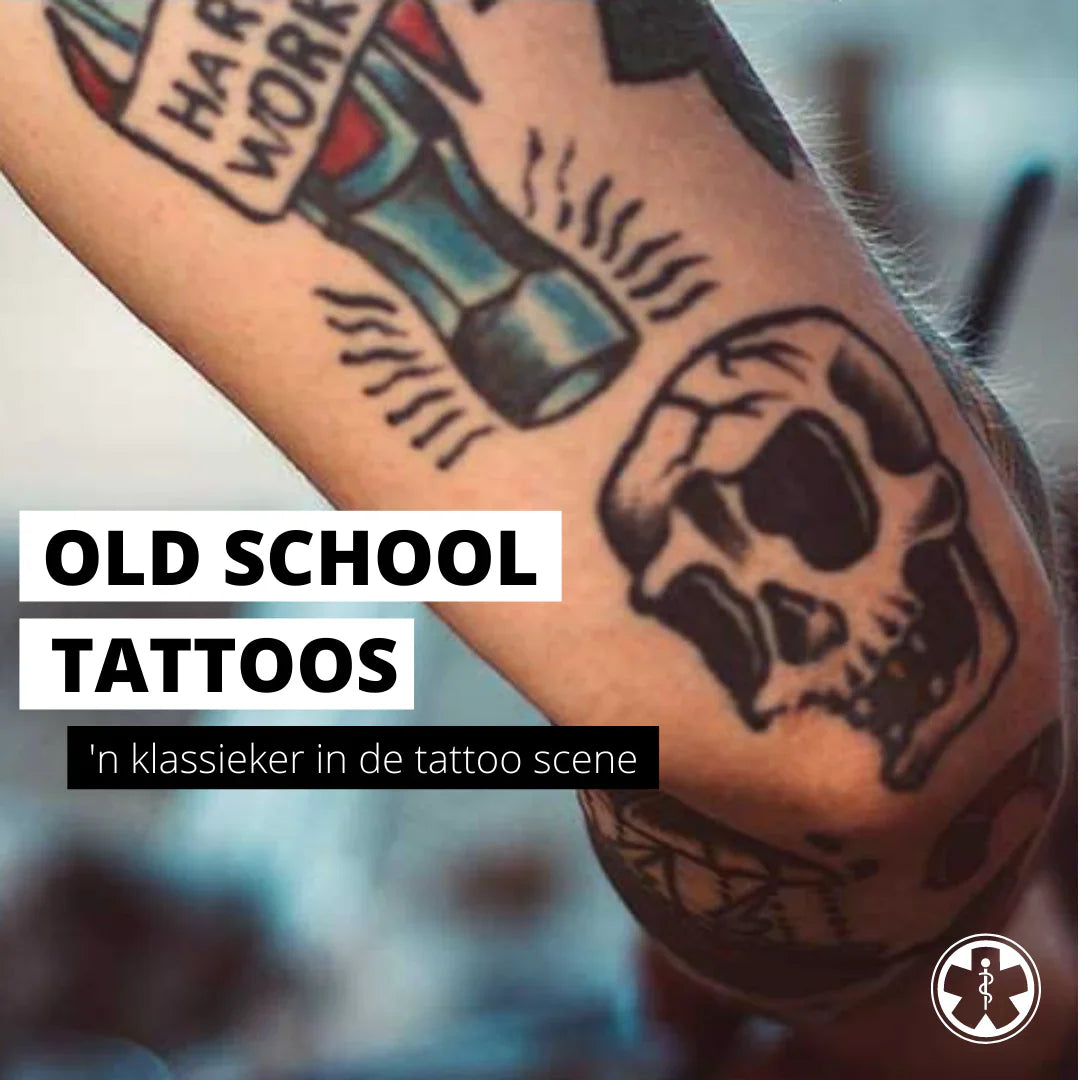
Nowadays, old school tattoos are a real statement, but in the 1920s, they were still the absolute tattoo standard and especially popular among sailors and soldiers. The color-intensive and eye-catching motifs are easy to recognize even after many years. But what do these roses, bottles, swords, and pin-ups actually mean, and where do these images come from? We've looked into this for you. In this blog, we tell you about the history and meaning of this unique type of tattoo.
Old School Tattoos: What do they mean and where do they come from?
Anyone wearing an old school tattoo today wants to make a statement. In the 1920s, that was quite different. They were very common then and therefore quite standard.
This type of tattoo was especially popular among sailors and soldiers at the time. Old school tattoos are very colorful, and their designs are quite eye-catching. You recognize them by their thick, black outlines and relatively large color areas. Even after a few years, they are still easily recognizable and give the wearer a certain roughness.
A huge plus: they continue to look good, thanks to the thick black lines. These are applied with a thicker needle. First, the outlines are tattooed, then the tattoo is colored in. Because the body encapsulates ink, the lines actually form a kind of barrier for the other ink.
Old school tattoos are for both romantics and free spirits.
Back in time
As described earlier in this blog, the old school tattoo cult began in the West around 1920. The creator of this style is the American Norman Keith Collins, also known as 'Sailor Jerry'.
He learned to tattoo during his missions in Southeast Asia. After his career in the navy, he chose a life in Hawaii. Here, he tattooed sailors and travelers who helped introduce the Old School tattoo style to the world. Since 1990, the style has seen a resurgence and is now socially quite accepted.
What you project with an old school tattoo
Modern tattoo trends with many fine lines cannot be easily combined with old school tattoos. This is probably why rough patterns are still popular with tattoo fans.
With an old school tattoo, you break certain rules: you are against social norms, you don't like expectations, and you don't care for trends that come and go. Essentially, an old school tattoo says: I don't care. Is this your motto? Then such a striking, colorful old school tattoo is definitely for you.
Popular old school designs and what they mean
If you look at the photos on the websites of old school tattoo artists, you'll see that some images appear very often. It seems certain designs are simply a must-have for old school fans.
These are typical old school motifs you often see:
- War symbols (weapons)
- Blood
- Skulls
- Predators
- Sea symbols (anchors, ships, and sailors)
If you want to know which image suits you best, be sure to read the overview below. Who knows, after reading it, you might say: 'I've made up my mind, that's what I want'!
1. Old school tattoos for free spirits and nature lovers
- Sailors and Native Americans are often depicted without a body, only with head and bust. They serve as protectors for the wearer.
- Images of Native Americans generally represent love for nature and inner peace. Think of motifs like Native American jewelry, tipis, totem poles, weapons, and tools.
- Carnivores are also often depicted. Usually from the neck up, sometimes with a complete body. By showing their teeth and claws, they appear threatening. Generally, these are wolves, bears, pumas, eagles, and other American animals.
- Ships represent travel, literally and metaphorically.
- Who doesn't know them: the old school swallows tattooed on the chest. Popular since 1920!
- Landscapes are usually depicted with thick borders. They remind us of the journeys we still want to make and the beautiful places we have been.
2. Old school tattoos for romantics and free spirits
- Hearts (broken, pierced with an arrow, or burning) are still popular among old school fans.
- Knives and swords depict heartbreak and give the wearer inner strength.
- Keys and locks are often seen on the chest, stomach, or arms. Over the past decades, these images have been added to existing old school images. Often worn by women.
- Pin-ups, mermaids, and sensual women have been worn, especially by men, since the 1950s.
- Roses are often combined with skulls, barbed wire, or weapons. They give the image a romantic touch (and something kitschy).
- Cherries represent temptation, playfulness, and pleasure.
3. Old school tattoos for the brave
- Skulls, Grim Reapers, and skeletons serve as good luck charms or as reminders. Mexican old school death masks are also quite popular nowadays.
- Modern and historical weapons (blades, grenades, rifles, pistols, and brass knuckles). Those who wear them gain courage, and they remind you that your life will one day end.
- Daggers symbolize justice and pain. Most old school fans wear a dagger on the forearm or in the middle of the neck.
- Dice blocks represent the future and luck or fate. Dice and playing cards are for this reason favorite motifs in the rockabilly scene.
4. These old school motifs are also popular
- The nautical star or compass. They signify willpower and steadfastness. In the early 1920s, sailors often had signposts tattooed. Essentially a precursor to the star and compass.
- Chauvinistic old school tattoos can be seen in flags, animals originating from a country (such as the giant panda for China), and sketches of states.
- Modern tattoo artists can turn almost any motif into an attractive old school tattoo. Whether it's a skyline or car parts, candy, or lipstick; with the right skills and experience, they will be immortalized on your skin in old school style.
What should you pay attention to when getting an old school tattoo?
Old school tattoos are recognizable by their thick, black outlines and large color areas. This is because the tattoo technique in Sailor Jerry's time was not as refined as it is now. Shape and color did not remain as beautiful for as long then as they do today.
The often simple motifs were immediately recognizable, even after years, despite the small changes the skin (and thus the tattoo) underwent over the years. Nowadays, tattoo artists use wide instruments consisting of several narrow needles that pierce the skin in parallel. The uniformly colored areas of the skin can be painful after tattooing. This is only temporary. Follow your artist's aftercare tips, and you'll be fine.
More blogs about different tattoo styles can be found at tattoomed.nl/blogs
TIP: Protect your tattoo from fading with our Daily Tattoo Care. This way, you maintain your color and keep the lines sharp. Highly recommended!
📅 This blog first appeared on February 25, 2020, and was last updated on March 8, 2024
Questions about tattoo aftercare?
Check out our tattoo aftercare page at your leisure. Do you have questions or just want more information? Feel free to contact us.